
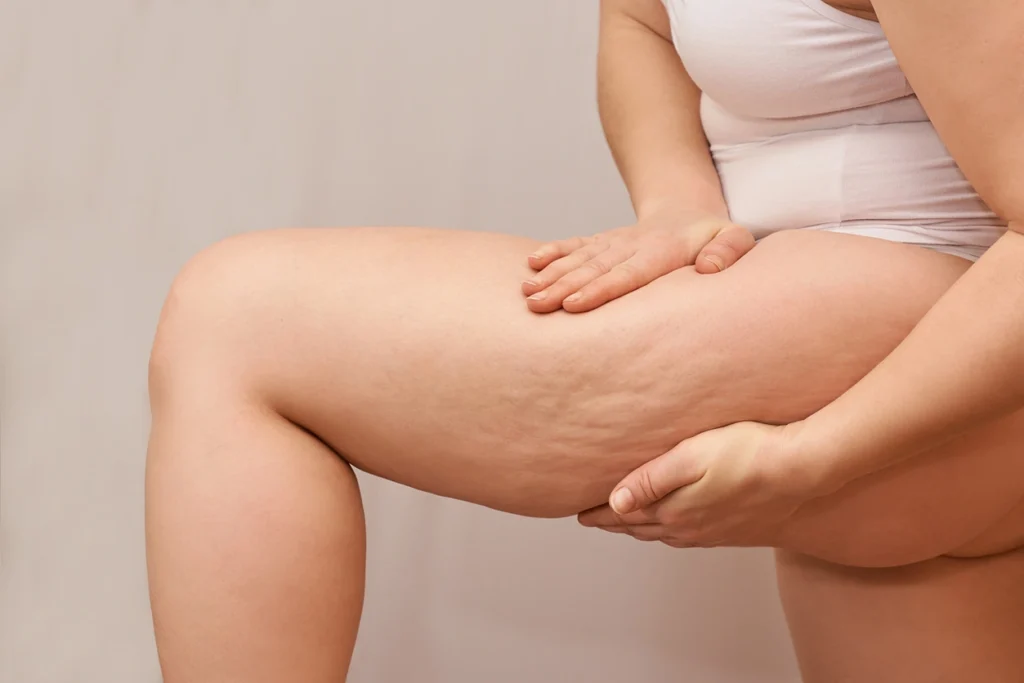
Cellulite is a common skin concern that can affect individuals of different body types, ages, and activity levels. It often appears as dimpling or an uneven texture in areas such as the thighs, buttocks, hips, or abdomen, and develops due to structural changes beneath the skin rather than weight alone. Because cellulite involves both connective tissue and skin quality, treatment approaches typically focus on improving skin firmness, texture, and overall structural support.
At EvenFlow Aesthetics in Pittsford, NY, cellulite treatments are approached through a medically guided framework focused on skin tightening, collagen remodeling, and gradual tissue improvement. Non-surgical technologies such as Morpheus8 are incorporated into personalized treatment plans designed to support smoother skin texture and more refined body contours over time.
What Causes Cellulite to Develop?
Cellulite develops due to structural changes beneath the skin involving fat distribution, connective tissue, skin thickness, and collagen support. Rather than being caused by weight alone, cellulite forms when underlying fat pushes upward against connective tissue bands beneath the skin, creating the uneven or dimpled texture commonly associated with cellulite-prone areas.
Because cellulite involves multiple layers of tissue, treatment approaches often focus not only on reducing visible dimpling but also on improving skin firmness, collagen support, and overall tissue quality. This is why non-surgical skin-tightening treatments are commonly incorporated into cellulite-reduction strategies to support smoother skin texture over time.
How Fat Distribution and Connective Tissue Affect Skin Texture
The appearance of cellulite is closely connected to how fat is distributed beneath the skin and how connective tissue structures interact with the surrounding tissue layers. Fibrous connective tissue bands anchor the skin to deeper structures, and when fat cells expand between these bands, the skin surface may begin to appear uneven or dimpled.
At EvenFlow Aesthetics, cellulite concerns are evaluated within a broader framework that considers skin quality, collagen support, and tissue structure rather than focusing solely on surface appearance. Treatments such as Morpheus8 are designed to support collagen remodeling and skin tightening beneath the skin’s surface, helping improve overall texture and firmness gradually over time.
Why Cellulite Can Affect Different Body Types and Ages
Cellulite can affect individuals across a wide range of body types, ages, and fitness levels because factors beyond body weight alone influence its development. Genetics, hormonal changes, collagen loss, skin thickness, circulation, and connective tissue structure can all contribute to how cellulite forms and becomes more visible over time.
As collagen production naturally declines with age, skin may become thinner and less structurally supported, making underlying dimpling more noticeable. Because these structural changes vary between individuals, cellulite may appear differently from person to person, regardless of overall body composition or lifestyle habits.
Non-Surgical Cellulite Treatment Options
Non-surgical cellulite treatment options are designed to improve skin texture, firmness, and tissue quality without the downtime or recovery associated with surgical procedures. Because cellulite develops through a combination of connective tissue changes, fat distribution, collagen loss, and skin laxity, treatment strategies often focus on improving structural support beneath the skin rather than simply targeting surface irregularities.
Modern skin-tightening technologies allow providers to address cellulite concerns through controlled stimulation of collagen and tissue remodeling. These approaches are often selected by patients seeking gradual, natural-looking improvement while maintaining flexibility in treatment planning and recovery time.
How Skin Tightening and Skin Firming Treatments Support Smoother Skin
Skin tightening and skin firming treatments support smoother skin by stimulating collagen remodeling and improving tissue support beneath the skin’s surface. As collagen production increases over time, the skin may gradually appear firmer, more even, and better supported structurally, which can help reduce the visibility of dimpling and uneven texture.
Technologies such as radiofrequency-based treatments work by delivering controlled energy into deeper tissue layers to encourage collagen and elastin production. Rather than creating abrupt changes, these treatments are designed to support progressive improvement in skin quality and firmness over multiple treatment sessions and healing cycles.
Why Patients Explore Non-Surgical Alternatives for Cellulite Reduction
Many patients explore non-surgical cellulite reduction options to improve skin texture and firmness without undergoing invasive surgery or extended downtime. Non-surgical treatments also allow for a more gradual and controlled approach, enabling adjustments to treatment intensity and progression based on individual skin response and treatment goals.
In addition, cellulite concerns are often linked to overall skin quality and tissue support rather than isolated fat accumulation alone. Non-surgical skin-tightening technologies may therefore offer a more targeted approach for patients seeking to improve skin firmness, collagen support, and visible textural irregularities simultaneously.
How Morpheus8 Supports Cellulite Reduction and Skin Tightening
Morpheus8 is a radiofrequency microneedling treatment designed to support skin tightening and tissue remodeling beneath the skin’s surface. By combining microneedling with controlled radiofrequency energy, the treatment targets deeper layers of tissue involved in collagen production and skin support. This approach allows Morpheus8 to address concerns related to skin laxity, uneven texture, and visible cellulite dimpling through a more structural treatment strategy.
Because cellulite is influenced by both connective tissue and skin quality, treatments that support collagen remodeling and tissue firmness are often incorporated into long-term cellulite reduction plans. Morpheus8 is commonly chosen for its ability to gradually improve skin texture while remaining non-surgical and offering relatively manageable downtime.
Understanding RF Microneedling for Cellulite Treatment
RF microneedling for cellulite treatment works by creating controlled micro-injuries within the skin while simultaneously delivering radiofrequency energy into deeper tissue layers. The microneedling component stimulates the body’s natural healing response, while radiofrequency energy supports collagen remodeling and tissue tightening beneath the skin’s surface.
This combined approach allows treatment to target both skin texture and structural support simultaneously. Over multiple treatment sessions, patients may notice gradual improvements in skin firmness, texture irregularities, and the appearance of cellulite-prone areas as collagen production and tissue remodeling continue to develop.
How Morpheus8 Stimulates Collagen Remodeling Beneath the Skin
Morpheus8 stimulates collagen remodeling by delivering controlled thermal energy into the deeper dermal and subdermal layers where collagen and elastin production occur. This process activates the body’s natural tissue repair response, encouraging gradual structural changes that may improve skin firmness and overall tissue quality over time.
Rather than creating immediate surface-level correction, collagen remodeling develops progressively as the skin heals and rebuilds supportive tissue structures. Because these improvements occur gradually, treatment results often continue evolving over several weeks and months following a series of Morpheus8 sessions.
What to Expect During Morpheus8 Cellulite Treatments
Morpheus8 cellulite treatments are designed to support gradual skin tightening and collagen remodeling through a controlled, non-surgical approach. Because cellulite develops beneath the skin’s surface, treatment planning focuses on improving tissue support, skin firmness, and texture irregularities over time rather than creating immediate correction after a single session.
Treatment plans are customized based on factors such as skin laxity, cellulite severity, treatment areas, and overall skin quality. This individualized approach helps ensure that treatment intensity, session spacing, and recovery expectations remain aligned with the patient’s goals and tissue response.
Consultation, Treatment Planning, and Procedure Expectations
The process begins with a consultation to evaluate cellulite concerns, skin quality, treatment areas, and overall suitability for Morpheus8. During this assessment, providers review factors such as skin laxity, connective tissue changes, and collagen support to develop a treatment strategy tailored to the patient’s anatomy and goals.
Patients interested in learning more about the providers guiding treatment planning can visit the Meet the Team page before their appointment. During treatment, Morpheus8 delivers radiofrequency energy through microneedling technology into targeted tissue layers beneath the skin. Sessions are generally well tolerated, and treatment plans may involve multiple appointments depending on the severity of cellulite concerns and desired level of improvement.
Recovery Timeline and Post-Treatment Skin Care Recommendations
Recovery following Morpheus8 treatment is typically manageable, though temporary redness, swelling, tenderness, or mild skin sensitivity may occur in treated areas as collagen remodeling begins. These effects generally improve gradually over several days as the skin heals and tissue response continues to develop beneath the surface.
Post-treatment recommendations often include avoiding excessive heat exposure, temporarily limiting strenuous exercise, maintaining hydration, and following provider-directed skincare instructions during the healing process. Because collagen remodeling occurs progressively, improvements in skin firmness and texture may continue to evolve over several weeks following treatment sessions.
Factors That Influence Cellulite Treatment Results
Cellulite treatment results can vary based on several structural and skin-related factors, including skin laxity, collagen quality, connective tissue changes, treatment area, and the overall severity of cellulite. Because cellulite develops beneath the skin’s surface, visible improvement often depends on how the tissue responds to collagen stimulation and skin tightening over time rather than a single isolated treatment.
Individual healing response and baseline skin quality also play an important role in treatment progression. For this reason, cellulite reduction is typically approached as a gradual process focused on improving skin firmness, texture, and tissue support through consistent treatment planning and collagen remodeling.
Why Skin Laxity, Texture, and Treatment Areas Matter
Skin laxity and tissue quality can significantly influence how noticeable cellulite appears and how the skin responds to treatment. Areas with reduced collagen support or thinner skin may show more visible dimpling because the underlying connective tissue structure becomes more apparent at the surface.
Treatment area also affects treatment planning and expected outcomes. Regions such as the thighs, buttocks, abdomen, and hips may respond differently depending on tissue density, skin thickness, and the degree of structural support beneath the skin. Evaluating these factors helps guide treatment selection and allows providers to set more realistic expectations for gradual improvements in texture and firmness.
How Multiple Treatments May Support Gradual Improvement Over Time
Because collagen remodeling occurs progressively, multiple treatment sessions are often recommended to achieve more consistent cellulite reduction and skin tightening over time. Treatments such as Morpheus8 work by stimulating the body’s natural repair response, which continues evolving gradually after each session as new collagen develops beneath the skin’s surface.
Rather than producing abrupt correction, repeated treatments allow tissue remodeling to build incrementally while supporting more balanced and natural-looking improvement. Long-term outcomes may also be influenced by factors such as aging, collagen loss, lifestyle habits, and ongoing skin maintenance, which is why treatment plans are often structured around progressive improvement rather than immediate transformation.
Finding Cellulite Reduction Near Me
Searching for “cellulite reduction near me” often involves finding treatments that improve skin texture and firmness without requiring invasive surgery or extensive downtime. Because cellulite is influenced by connective tissue structure, collagen support, and skin quality, treatment outcomes depend not only on the technology being used but also on how treatment planning is tailored to the individual’s anatomy and skin condition.
A consultation plays an important role in this process by allowing providers to evaluate cellulite severity, skin laxity, treatment areas, and overall tissue quality before recommending a treatment approach. This helps ensure that expectations, recovery considerations, and treatment goals remain aligned throughout the treatment process.
Why Choose EvenFlow Aesthetics for Morpheus8 in Pittsford, NY
At EvenFlow Aesthetics, Morpheus8 treatments are incorporated into medically guided treatment plans focused on collagen remodeling, skin tightening, and gradual tissue improvement. Rather than using generalized protocols, treatment recommendations are based on factors such as skin quality, connective tissue changes, and overall body-contour goals.
The practice emphasizes individualized assessment, measured treatment progression, and natural-looking improvement over time. This structured approach ensures that cellulite reduction and skin-tightening treatments remain aligned with long-term skin quality goals while maintaining realistic expectations throughout the treatment process.
Explore Personalized Skin Tightening Treatments for Cellulite Concerns
If you are exploring non-surgical cellulite treatment options and want to understand better whether Morpheus8 may be appropriate for your concerns, scheduling a consultation is the next step. A personalized evaluation can help determine how factors such as skin laxity, tissue quality, and cellulite severity may influence treatment planning and expected results.To learn more, contact EvenFlow Aesthetics at (585) 226-7773, visit 19 State Street, 2nd Floor, Suite, Pittsford, NY 14534, or request an appointment through the online contact page. Personalized skin-tightening treatments may help promote smoother texture, firmer skin, and gradual improvement in cellulite-prone areas over time.